Monday, February 28, 2011

News Impacts Your Physical and Mental Health

Why pay attention to news? 
When I was young(er), I hated learning about history or paying attention to politics. Since these things were outside of my immediate control, I considered them irrelevant to my personal life. Over the last four years in college, I've become acquainted with a couple of truly amazing history and political science professors. Learning from them enlightened me to how relevant these topics actually are to my every day life, and I found a passion that I didn't know was there.

History is the reason we are all here. When I stopped taking our culture, rules, society, etc for granted and started to wonder why they are the way they are, I realized that understanding history is the only way to understand why the world is how it is. 

Political science has a similar relationship and is almost inseparable from history. The true implications of politics never really hit me until after I became interested in nutrition. A politician's decision about what crops to subsidize with our tax dollars influences a series of complex integrated systems that eventually impacts the physiological processes going on in our cells. This is just one example of how all these fields are tied together; the implications are staggering.
deal
Learning about politics, economics, and history then using what you've learned to analyze news within a context is almost an addicting occupation. Hours can fly by reading political analysis and trying to understand what's going on in the world. And it's easily justifiable because I truly believe that having an educated populace is the key to a functional nation. 


On the other hand... 
While I enjoy staying up-to-date on world news, there are drawbacks. For example:
  • The constant influx of negative news from around the world is a chronic stressor
  • My mind spins out of control thinking about options, implications, solutions
  • All the negative news can lead to feeling angry or depressed
  • Having no personal control over things can make situations seem hopeless
I think about the trade off between following world events and the stress they cause. Mark Sisson released an article today called 'How the News Impacts Your Health (and What You Can Do About It)'
which inspired me to write this. In the article, Mark makes some great points and cites some interesting research.
"Our constant access to all that ails, however, comes with genuine mental and physical health costs. Although we might think we don’t participate in media representation of disturbing news, research tells us otherwise. A study of 89 people who were shown footage of four traumatic events showed that nearly 20% reported symptoms related to post-traumatic stress disorder(PTSD) as a result of the viewings. (Frequency of exposure was a factor in participants’ emotional reactions.) As the head of the study explained, “’Acts of violence erode our sense of security and create intense feelings of anger, fear and helplessness. Watching these events and feeling the anguish of those who are directly experiencing them can impact on a certain percentage of individuals causing longer lasting effects."
So apparently research shows that watching traumatic events causes serious problems. Mark goes on to make the point that we are exposed to a far wider net of news than ever before in our evolutionary history:
Until recent times, our context for experiencing the world and empathizing with those around us was very limited – a tribe, a town. Our modern media and the “connected world” hand us each, in some regards, the fate of Atlas.
Later he address the exact question I've been thinking about:
In the end, the question remains: is there a way to be informed in a meaningful, deeper sense while not immersing ourselves in the constant barrage of bad news? While we all have the power to turn off or throw out the TV or otherwise unplug, there’s got to be a healthier middle ground between sticking your head in the sand and putting yourself in the middle of every human tragedy. What information truly obliges our attention for the sake of self-improvement and social action and what information simply constitutes unnecessary – even cruel – emotional clutter?
Earlier in the post he mentions that relaxation exercises helped reverse the effects of watching traumatic events. What other strategies are there?
[C]onstant exposure to endless threads of instantaneous, disassociated “news” without the natural filters of time and context has the power to leave us overwhelmed and still lacking in larger perspective. We’d do better, he suggests, spending less time staying on top of each trivial update and devoting more time to discussing, reflecting, and thoughtfully acting on the major issues and events that we feel require our attention. 
I think this is a really smart strategy. Keep news in context, don't pay attention to each "trivial update", and spend more time reflecting on a few major issues that we can impact.

Conclusion 
Cortisol is a hormone that the body releases in response to stress. Although having some is important, too much causes fat gain, muscle breakdown, a reduction in insulin sensitivity, and unfavorable changes in hormone status. Cortisol is released primarily in response to stress. My current understanding is that the body does not differentiate very well between different types of stress, so physical, mental, and emotional stress can all add up together to increase cortisol levels. We don't want this to happen.

Here are the strategies I use to manage this:

  1. Limit the amount of news I read each week. As Mark says, ignore the "trivial updates".
  2. Keep news in context and don't view it as a disassociated stream of negative events. 
  3. Focus on the important local issues. These are the ones we are much better at dealing with.
  4. Spend time relaxing, laughing, meditating, or whatever helps foster a positive mood.
  5. I always keep in mind that the current moment is the only one I can control because the past has already happened and the future isn't here yet. 

Tuesday, February 22, 2011

Real Food 5: Lamb with Mushrooms and Sweet Potatoes

Sourcing Local Meat
Whenever I visit our local North Coast Co-Op, the first place I always go is the butcher. They have, without a doubt, the best meat selection I've ever encountered at a local store. Meat options range from wild salmon, fresh bay shrimp, local grass-fed beef, local lamb, local pork, buffalo, elk, and more. Here are some of the cuts I frequently buy:

  • Local and grass-fed ground beef 80%: $2.49-2.99/pound
  • Local and grass-fed beef liver: $2.99/pound
  • Local and grass-fed lamb stew meat: $3.99/pound
  • Local and grass-fed lamb roast: $3.99/pound
  • Local natural pork stew meat: $3.99/pound
  • Local natural pork roast: $4.99/pound
  • Natural pork country style ribs: $3.99/pound
If these aren't amazing prices for top quality meat, I don't know what is. I rave about the butcher at the Co-Op to everyone who will listen. 

On my trip to the butcher on Sunday they had some more local lamb stew meat, so I bought two pounds all of it.

Slow-Cooked Local Grass-Fed Lamb, Mushrooms, and Sweet Potatoes

Lamb in slow-cooker

Woke up at 9am this morning to put the lamb in:
  • A couple lbs lamb
  • 1 can coconut milk
  • Salt
  • Pepper
  • Rosemary
  • Cumin

Then I just press go and leave it for 6 hours or so on high. 


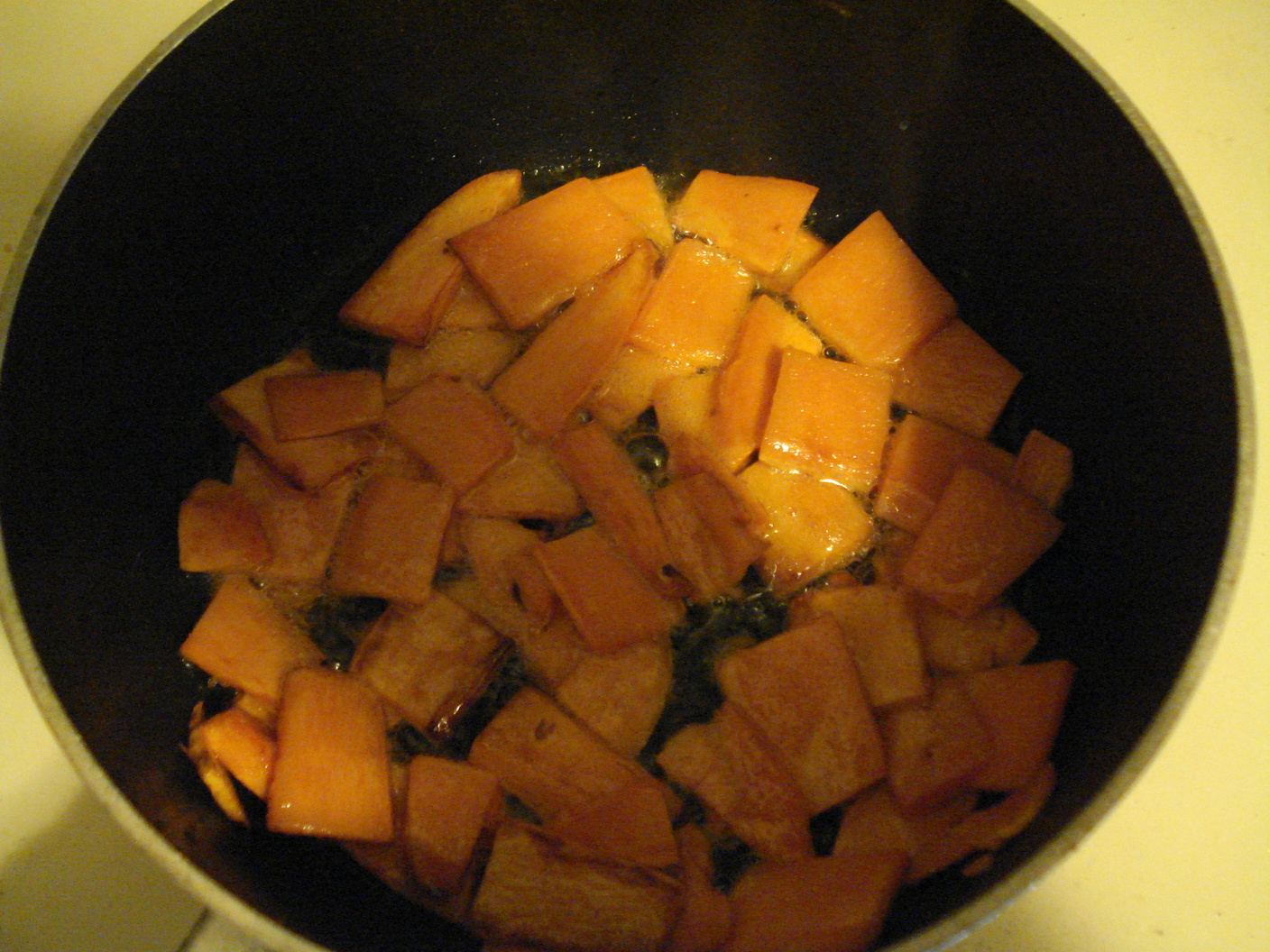
Sweet Potatoes brazing in coconut oil and ghee

When I got home I threw sweet potato slices in to a mix of ghee and coconut oil.
      
- 1 lb sweet potato (one medium)
- couple spoonfulls of oil (can use butter, ghee, coconut oil.).

Then just turn to med heat, cover and let the slices sizzle in the oil until they are soft on the inside, a little crispy on the outside, and soaking in oil. 

Absolutely delicious, this is a go-to dish for me.


Finished lamb with mushrooms on top.

The last step was to sautee some mushroooms in olive oil until they were soft and soaking with oil, then pour them over the lamb in a bowl. 

This meal was amazing, so simple and easy, but tastes fantastic.

Wednesday, February 16, 2011

Get Over Fear of Bacteria: Fermentation Primer

Fun with fungi and bacteria. 
In my last post I mentioned how I had been experimenting with some home fermentation techniques. Well it took a little while, but the ball is really rolling on this now. I just tried a bottle of the latest elixir... Wow! It inspired me to sit down and type this out right now.


Some gooood stuff. 
Here's a brief explanation of  what fermentation is, its history, and benefits.

What is fermentation?
Fermentation is when microorganisms eat a carbohydrate, usually sugar, and release byproducts such as ethanol, lactic acid, and carbon dioxide. Basically you feed bacteria or yeast (fungi) sugar and they produce copious amounts of alcohol, CO2, and lactic acid. This results in a well preserved and usually bubbly (and sometimes alcoholic) food or drink. Think of fermentation as bacteria predigesting food to make nutrients more available for absorption.

History of fermentation.
Fermentation has been occurring in nature for longer than humans have been on the planet; in fact it's a vital process in the cycling of nutrients through the food chain that makes life possible.

The earliest evidence of humans controlling the fermentation process is wine-making about 8,000 years ago in the country of Georgia [1].


The first alcoholic society. Just kidding.
Iran, Babylon, Egypt, Sudan, and Mexico all were using fermentation techniques thousands of years ago and nearly every indigenous culture has developed some type of fermentation techniques. But why is it that fermentation has been sought out by so many different societies?

What kinds of food are fermented?
Here's a small sampling of foods that are dependent on the action of bacteria and yeasts.
  • Alcoholic beverages: Wine, Beer, Liquors, Mead
  • Lacto-fermented vegetables: Sauerkraut, Kimchi
  • Fermented dairy products: Yogurt, kefir, cultured milk, cheese
  • Bread: Such as sourdough (CO2 gas from bacteria causes bread to rise)
  • Fermented teas: Kombucha
  • Water kefir
  • Beet/bread kvass
  • Fermented soy: Miso and tempeh
  • Cured meats: sausages, salami, etc.
  • Other meats: rotten fish in the ground (yum!)
  • Poi - fermented Taro root
  • Fermented cassava
  • Many types of fermented grains and legumes.

Benefits of fermentation.
Although there are probably a lot of things I'm missing, fermentation seems to be generally used for these reasons:
  1. Adds a diversity of textures, flavors, and smells to foods.
    • Fermented foods taste awesome, but are definitely an acquired taste. 
  2. Preserving foods to last a long time without refrigeration.
    • Using bacteria or yeasts to convert carbohydrates in to alcohol, lactic acid, and acetic acid dramatically increase the amount of time that foods can go without spoiling. Before refrigerators, this is what everyone had to use.
    • For example lacto-fermentation creates lactic acid, a natural preservative that inhibits the growth of putrefying bacteria. 
  3. Improves nutrients available in foods.
    • Fermentation dramatically increases the availability of nutrients such as vitamins, minerals, and amino acids through a variety of mechanisms. Bacteria predigest foods and make them available for us to absorb. This really deserves an article of its own.
    • Fermentation creates Vitamin K2, an extremely important nutrient that nearly everyone is deficient in.
  4. Gets rid of anti-nutrients.
    • Double star this one- this is really important. A main part of ancestral nutrition is to not eat the anti-nutrients that are present in grains and legumes such as phytic acid, lectins, and other proteins. 
    • Fermentation breaks down phytic acid, destroys lectins, and can eliminate other problematic proteins. This is why it's so important to properly prepare grains and legumes if you are going to eat them.
  5. Decreases cooking time and uses less fuel.
    • This isn't so important in the modern world, but if you had limited amount of time and fuel this could be a big benefit. 
  6. Indirect benefits- Probiotic Bacteria:
    • Double star this one too, probiotic bacteria deserve an article of their own. In short, humans depend on the bacteria in our guts for a huge range of physiologic functions. With our industrial diets, good bacteria are often forced out and putrefying bacteria take over the gut which leads to a wide variety of nasty problems. 
So here's what some experts say on fermented foods:

Chris Kresser - The Healthy Skeptic:

"Almost all healthy, traditional cultures that have been studied regularly consume fermented foods like yogurt, kefir, sauerkraut, kim chi and kombucha. These foods have numerous health benefits, but in the context of heart disease one of the most important reasons to include them in the diet is that they are one of the few dietary sources of vitamin K2.  
...A 1993 study showed that those in the highest third of vitamin K2 intake were 52 percent less likely to develop severe calcification of the arteries, 41 percent less likely to develop heart disease, and 57 percent less likely to die from it."
"Probiotics found in fermented foods like yogurt, kefir, sauerkraut and kimchi strengthen and maintain the mucosal barrier system (in our respiratory and intestinal tract), which is our first line of defense against pathogens. What’s more, 75% of our immune system if found in the gut."
 Stephen Guyenet - Whole Health Source
"Healthy grain-based African cultures typically soaked, ground and fermented their grains before cooking, creating a sour porridge that's nutritionally superior to unfermented grains. The bran was removed from corn and millet during processing, if possible. Legumes were always soaked prior to cooking.

These traditional food processing techniques have a very important effect on grains and legumes that brings them closer in line with the "paleolithic" foods our bodies are designed to digest. They reduce or eliminate toxins such as lectins and tannins, greatly reduce anti-nutrients such as phytic acid and protease inhibitors, and improve vitamin content and amino acid profile. Fermentation is particularly effective in this regard. One has to wonder how long it took the first agriculturalists to discover fermentation, and whether poor food preparation techniques or the exclusion of animal foods could account for their poor health."
Good resources from Stephen:


Chris Masterjohn - The Daily Lipid
"Vitamin K2 is abundant in grass-fed animal fats and fermented foods, and promotes broad facial structure, healthy bones and teeth, a properly functioning nervous system, and robust cardiovascular health.
An accumulating body of research suggests that vitamin K2 may also protect against cancer."
 Robb Wolf - Paleo Solution
"The roles these bacteria play are varied, but they are critical in not only the digestive process, but also in actually protecting the gut lining. Our beneficial flora (the living mass of bacteria in our intestines) actually line the villi and microvilli in such a tight association that the bacteria are literally the first layer of our intestines. These bacteria displace potentially pathogenic bacteria, yeast,k and parasites; help us to digest macronutrients; and are responsible for production of various vitamins from precursor molecules.
...Most people are familiar with various fermented foods such as yogurt, kiefer, miso, kimchi, and raw sauerkraut. All of these foods (if not pasteurized) provide live cultures of beneficial bacteria."
Mark Sisson - Mark's Daily Apple

"[F]ermentation can render previously inedible or even dangerous foods edible and somewhat nutritious. The lectins, gluten, and phytates in grains, for example, can be greatly reduced by fermentation. I don’t advocate the consumption of bread, but if you’re going to treat yourself to any gluten grain-derived food, make real, long-fermented sourdough bread the one. The Romans managed to do okay on the stuff, but that’s only because meat was expensive and didn’t travel as well. Real sourdough is a good choice for guests who simply must have their bread, but don’t think fermentation makes it Primal approved.
Dairy is another beneficiary of fermentation. In fact, next to no dairy at all, I put fermented, raw, grass-fed dairy as the optimum form. The fermentation process breaks down the lactose, thus mitigating a potentially problematic sugar and decreasing the carb content (you can consider the official carb count of real yogurt cut in half; producers list the number of carbs present in the dairy before fermentation, and the fermentation process breaks down the lactose/sugar)." 


Wrap up.
Fermented foods is fun to make and has numerous health benefits. Stay tuned for part 2 where I'll show you what I've been making.

What kind of fermented foods do you like? Leave a comment with your thoughts.

Saturday, February 5, 2011

Tyler Does Power Cleans, Military Press, Squats

Had a fun day in the gym for our Saturday track lifting. I brought in my camera to get video of some exercises- very interesting as I had never seen myself lift from the third-person view before. I'll go through my workout and do a little self-analysis on the lifts.

Today's Training.
Mostly keeping the weights in a comfortable range. Were getting in to track season so I want everything to be fast and explosive, no grinding reps or having to psych myself up for a really heavy set (save it for the off-season). This is something Dan John and I talked about at his seminar a couple weeks ago.
  1. Power Cleans: 
    1. 135 x 5 (warmup)
    2. 185 x 3 (warmup)
    3. 205 x 3 (video 1)
    4. 205 x 3
    5. 205 x 3
    6. 205 x 3
    7. 225 x 1 (video 2)
  2. Military Press:
    1. 45 x 5 (warmup)
    2. 75 x 5
    3. 95 x 5
    4. 115 x 3 (video 3)
    5. 145 x 2
  3. Squat:
    1. 135 x 5
    2. 185 x 5
    3. 225 x 3
    4. 275 x 3 (video 4)
  4. D/B Farmer's Walks
    1. 3 x 1 lap w/ 85 lb dumbells
Video 1: Power Clean 205 x 3

I feel like this is pretty good overall. Watching it in slow motion, I notice that my hips could extend and "pop" more, and my elbows are pulling a little bit too early. Fixing these two things should make this even easier.

 Video 2: Power Clean 225 x 1


I felt pretty good about this too. Catch could have been a little bit more smooth w/ high elbows, and I still need to pop the hips and keep the arms straight as long as possible.

Video 3: Military Press 115 x 3


Since watch Mark Rippetoe's Basic Barbell Lifts DVD, my military press form has improved significantly. The bar is more or less traveling in a vertical path with my head pushing through my arms at the top. More practice will smooth it out further.

Video 4: Squat 275 x 3


Not bad on the squats either. I've been staying pretty light lately and I think my strength has gone down a little bit because this did not feel as easy as usual. Everything looks pretty solid, but my hips came up a little too fast on the last rep.

See anything I missed? Let me know what you think in the comments. Any tips are appreciated!

Wednesday, February 2, 2011

Healthy Home Economist, My Fermented Food Adventures

Bringing it back.
I apologize for the hiatus- my last semester of school just started and time is stretched pretty thin between 17 units of class, track & field season, getting a business going, and applying for internships and grad school. Exciting stuff, but had to push the blog to the side for a while. Now that things are starting to even out I've got some good stuff coming down the line.

Healthy Home Economist.
In my internet travels I recently came across Sarah's blog 'The Healthy Home Economist', and I have to admit I'm very impressed. Her views on nutrition are pretty aligned with the Weston A. Price Foundation (A good thing- check out their site if you haven't).

After reading a couple of articles I went through several months of archives reading articles and watching her videos (which are excellent). Sarah covers a variety of topics from nutrition, environmental pollutants, medicine, food politics, exercise, and has several great videos how to do the stuff yourself. Sarah obviously follows her own advice, she is in amazing shape for a 40-something mother of 3 (but who's counting, right?).

My favorite parts of her site are the videos showing how to make fermented foods. A lot of these recipes are from Nourishing Traditions, one of my top nutrition and recipe books, but the recipes are far easier after you watch the process in a video.

In case you don't know, fermented foods are incredibly important for a variety of reasons that I will cover in depth in future posts such as repopulating intestinal bacteria, displacing bad bacteria, neutralizing plant toxins and more. They are one of the main things that modern people (Americans especially) are severely lacking in our diet.

Here are some of my favorite food videos so far:

Kombucha:

Kefir:

Beet Kvass:

And here are some of my other favorite articles:

Great work Sarah, keep it up.

Monday, January 10, 2011

This guy is an animal


Thanks to Hans at Specific Strength for finding the video.

Thursday, December 23, 2010

Optimal Level of Body Fat?

This question posted on PaleoHacks forum last week:
How lean can you get with strict paleo?
Let's hear some body fat percentages! Just how lean is everyone getting on strict paleo?
It seems like we see tons of success stories.. people dropping a ton of weight in going from obese to fit, but I haven't seen too many completely shredded people who are strict paleo.
I've actually gone up from around 8% to 9.5-10% in the year since I went strict (was working on low fat SAD with a calorie deficit with way too much activity and too little sleep before, so I am unquestionably healthier now).
Jamie Eason...
This is something I've thought about quite a bit, here are my current thoughts on this topic.
The evidence does show that an evolutionary or paleo diet is the healthiest diet possible, but when I think about leanness that leads to another question...
Is being ultra lean the healthiest state for your body?
Despite the instinctive appeal I (and many others) have for being in an extremely lean state, I doubt that this is the absolute healthiest state for the body to be in. Having a small amount of available body fat for hormone production, cell membranes, extended fasts, and other homeostatic functions is probably a good thing. This might explain your slight increase in body fat with a corresponding increase in wellbeing/health. 
However, it is certainly possible to get extremely lean by manipulating macronutrient ratios, exercise modalities, and maybe some intermittent fasting. How lean will depend on your individual genetics and desire. Eating slightly under maintenance calories while maintaining your muscles mass while result in fat loss, but I don't know if this is the optimal state for your body.
GSP - lean mean machine
This being said, I vary between 7-10% body fat, and many of my fellow athletes I have converted to an evolutionary diet are in a similar range.

Wednesday, December 22, 2010

Alcohol and Evolutionary Nutrition

File:Tequilas.JPGA primer on alcohol.
Alcohol is a beverage that contains ethanol. Ethanol is the molecule that makes all the fun effects when you drink some booze, and is a byproduct of bacteria during the fermentation process. Fermentation is one of the oldest organic reactions that has been used by humans. According to the book "Origin and History of Beer and Brewing: From Prehistoric Times to the Beginning of Brewing Science and Technology", alcohol has been produced by most cultures of the world, including hunter-gatherers.

Alcohol can be divided into two broad categories: Distilled and non distilled. Non distilled alcohol includes beer and wine- beer usually from a cereal grain and wine from grapes. Distillation is the process of concentrating the alcohol content of a fermented beverage. Distilled alcohol can further be divided in to liqueurs and spirits. Liqueurs are distilled and sweetened alcoholic beverages whereas spirits are the unsweetened distilled drinks.

Alcohol in an evolutionary diet - minimizing damage.
One of the most common questions I hear from other college students is about alcohol, what kind is best, how much, etc. This post will attempt to address some of these questions. 
  • How much.
    First off, consuming alcohol in large quantities in not beneficial for physique, performance, or health. However, nearly everything I've seen indicates that moderate consumption of alcohol is associated with positive health outcomes, particularly red wine. I consider a glass or two of wine with dinner as fine, a bottle is probably not. If your drinking to party or get drunk, drink as little as you can to get the desired effects.
  • Types.
    When drinking, the number one thing to avoid is gluten-containing drinks (beer) and sugary or sweetened drinks. These types of alcohol are by far the most destructive to health and physique. I recommend using red wine or spirits such as tequila, vodka, gin, etc. I'll share my favorite drink recipe later in this post.
  • Timing.
    Try to start early in the night, preferably not on a full stomach. This means it will take less alcohol to feel the effects. Also try to finish early and have some protein and fat afterwards as drinking too close to bed time will impact sleep quality.
As far as overall diet recommendations on days you plan to party, I think Martin Berkhan's recommendations are the best. His post on alcohol, fat loss, and muscle is very good.

Here's my favorite drink- my athlete friends and I have found that this is the best way to minimize the negative effects of alcohol. Credit goes to Robb Wolf on this one:


NorCal Margarita
  1. 2–3 shots of 100% agave tequila.
  2. Juice and pulp from one lime.
  3. Shake it all up with some ice.
  4. Add soda water to taste. Update: Lime-flavored soda water gives it an extra kick.
Here's why this drink rocks:
  1. Tequila is fermented agave juice, which makes it gluten and starch-free.
  2. Insulin release is blunted by lime, helps maintain insulin sensitivity.
  3. Alkaline kidney load from limes
  4. CO2 bubbles help ethenol enter blood stream more quickly, so you can drink less for same effects.
If your going to a bar, you can get this drink by asking for a well drink with tequila, club soda, and the juice and wedges of a lime.


Did I forget anything? Leave any suggestions or ideas in the comments.

Saturday, December 18, 2010

Mastering Muscle Soreness

Muscle Soreness
An alarm clock wakes you up from the middle of a sound slumber. It's time to go but your eyes are heavy and your body wants to go back to sleep. You swivel your legs over the side of the bed and stand up as a wave of pain passes over your body. An aggressive met-con or weights workout has left you with a serious case of post-workout muscles soreness but you know you've got to perform again later in the day. As you make some coffee you ponder how to get your body ready for the next workout...

Sound familiar? 

Days like these used to be commonplace for me, I've had more of these than I can count. 20 or 30 hours a week of sprinting, jumping, throwing, and lifting can do that to you. My experiences have led me through necessity to find the best methods of accelerating recovering from strenuous exercise. Although the exact cellular causes of Delayed Onset Muscle Soreness (DOMS) are currently unknown, it doesn't really matter because this stuff works regardless of what is going on. 

Maximizing Recovery
After being forced to seek out the best methods of recovery and for mitigating muscle soreness. Here are the things that worked for me, with the most effective first. Note that what will be most effective for you is probably whatever aspect you are currently most deficient in.

  • Sleeping a lot: Try to get 9.5 hours of sleep a night in a totally dark and quiet room. Magnesium and melatonin help a lot with this. Natural Calm is by far the most effective magnesium supplement I've found... 2-3 tsps in a cup of hot water an hour before bed really chills me out. Everyone I've given it to raves about it. Time release melatonin is you best bet, as I have found that I sometimes wake up in the middle of the night with the instant release. 
  • Eating for recovery: This means follow the same basic guidelines: Plenty of protein, fat, and avoiding inflammatory foods (grains, sugar, n-6 PUFA). If your pretty lean, some sweet potatoes or yams will also accelerate recovery. Drink a lot of water. If you are someone who tolerates dairy products, a couple glasses of whole milk after a hard workout is a powerful recovery agent. My favorite is goat milk as it tends to be less allergenic and insuligenic according to Robb Wolf. 
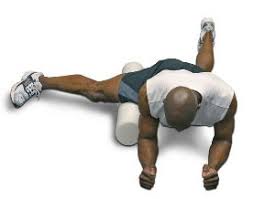
  • Massage work: This one is critical. Using various massage tools and information from the Trigger Point Therapy Workbook, I felt like I was given a new body without any of the previous aches, pains, and stiffness. Crucial for increasing sports performance. Most versatile are a foam roller and a lacrosse ball. Can be done before, after, or during workouts. I do one to three 5-15 minute massage sessions on most days. A Tiger tail and Theracane have also been extremely beneficial for me. Best is if you can find a good partner to trade massages with.
  • Warming up right: Doing dynamic mobility work and making sure my muscles are hot helps a lot for preventing excessive soreness. Magnificent Mobility by Eric Cressey is a great place to start. 
  • Recovery workouts: Do something that takes out the eccentric motion of exercise, which creates most of the soreness. Pulling a sled is one of my favorites.
  • Enzymes: In-season I noticed that some systemic enzymes like wobenzym or something similar decreased muscle soreness a lot. However, once my CRP (systemic inflammation levels) got really low from diet and sleep, the enzymes no longer had the same benefit. Same thing with the tumeric- works if your inflammation levels are high, effects drop off as inflammation is lower.
  • Heat: I never found much of a benefit from ice baths. They did make muscles less painful in the short term (numb) but didn't accelerate recovery at all. I did them every day for 3 months then stopped and noticed no difference in recovery. Heat always worked better for recovery for me.
  • Don't do stupid shit: If you just did heavy deadlifts yesterday and go out to flip a 300lb tire for a 100 meters, this is counterproductive, you are a dumbass, and you will be painfully sore for a week. Don't ask how I know this. 
Any other ideas? Leave a comment and let me know what has worked for you.

Real Food 4: Nori Rolls

More food posts
There's been a request for more posts about food (shoutout to Max). Luckily I've been making tons of great new foods and have some pictures to share with you guys.

The Nori Roll
Lately for my meals I've been making a lot of ghetto sushi. It makes a delicious meal fit for a king, kind of like a sandwich without the bread. This has become a staple for me because it is healthy, tastes amazing, versatile, and very quick too make. Here's the basic idea:

  1. Take a sheet of Nori
  2. Add base: egg or cauliflower rice.
  3. Add meat: shrimp, ground beef, chicken, steak, etc.
  4. Add accessories: Avocado (my favorite), caramelized onions, whatever your heart desires. 
  5. Add flavoring: my favorite is Sriracha hot sauce or some type of wasabi sauce. 
  6. Wrap it up. If you haven't used Nori before this may be difficult but after you try it a couple times it gets a lot easier.
Almost ready: Nori with egg, cauliflower rice, shrimp, avocado, and sriracha.
One of the great things about this is how flexible the recipe is. You can create great combos depending on whatever you have lying around. The other day I made one with scrambled eggs, bacon, and avocado. I've found that cooking up a few types of meat and having them ready throughout the weak when needed allows me to make a complete meal in a couple of minutes.
A finished product: Egg, cauliflower rice, grassfed ground beef, avocado, sriracha sauce. Veggies on side
Nutrition.
Nutrition on these are great- Nori is high in iodine (you might be deficient if you don't eat much salt), Vitamin A, and several other micro-nutrients. There is good fats from the meat, sea food, eggs and avocados, plenty of protein from meats and eggs. I usually have a few vegetables on the side when I've got some lying around.

Odds and ends.
If anyone requests it, I'll post a video of how to make a nori roll including the rolling part.

Here's a quick primer on how to make cauliflower rice: 

  1. Shred up a head of cauliflower with a cheese grater or a food processor. 
  2. Heat up some oil in a pan
  3. Throw the cauliflower in the pan over medium heat and cover with a lid. 
  4. Cook for 10 minutes or so, whenever the cauliflower starts to get soft.
  5. You can use it plain or add spices during cooking for flavored rice.
This is a vegetable replacement for rice that can be used in any type of meal. It has the same consistency as rice and tastes great. You can make a big container of it and use it throughout the week. 

Questions or comments?