Showing posts with label food. Show all posts

Friday, April 22, 2011

7 Tips for Conventional Meats


Don over at Primal Wisdom recently wrote a post about one of the dangers of conventional meat, antibiotic resistant bacteria. You can read about it here: Conventional Meat May Contain MAR Bacteria: What To Do About It

In the post he made a list of 7 tips for buying and cooking conventional meats. They're great tips and I have reproduced them here:
1.  If eating conventional meats, eat less turkey and pork compared to beef and chicken.   
2.  Consider buying meat frozen or freezing it after purchase, because freezing can reduce microbial concentrations by up to 97-99%. 
3.  Eat more whole cuts of meat and less ground meat, since ground meats may have bacteria in them whereas whole cuts will generally only have bacteria on the outside surfaces. 
4. Wash your hands and counters after handling uncooked conventional meats. 
5.  Cook conventional meat adequately. 
6.  Whenever possible, get grain-fed meats from animals raised without antibiotics. You can get them from local farmers, butcher shops, and some 'natural' markets.  In Arizona, Sprouts Market and Sunflower Market both sell grain-fed meats from animals raised without antibiotics.  Animals raised without antibiotics very likely have lower counts of antibiotic-resistant microbes.  
7.  When economically practical, buy meat directly from farmers who raise their animals without antibiotics on pasture or species-appropriate diets.    

Wednesday, April 13, 2011

Evolutionary Nutrition: 3 Ways to Always be Prepared


"By failing to prepare you are preparing to fail" 
                                                          - Benjamin Franklin 
Preparation is Key
I've learned from my own experience and observed dozens of times that preparation is key when you are adopting a new way of eating. I really emphasize the importance of this with the people I work with because I have seen it derail people so many times.

Here's what I'm talking about: You're starting an evolutionary diet and aren't quite familiar with the foods you're going to be eating. You end up stuck at school or work with nothing on hand and not quite sure how to improvise. You're starving and end up grabbing a pack of doritos or a piece of pizza. Not an optimal situation, so here's how you deal with it.

There's a couple options, depending on your preferences:


1. Intermittent Fasting:

Martin Berkhan (on the right) has pioneered this approach, it works very well. 

Intermittent fasting is a very effective method of eating for fat burning and has numerous health benefits as well. If you know you'll be somewhere with quality food options in a reasonable amount of time and you can distract yourself from being hungry, just wait till you have access to good food.

This method is extremely liberating because food is never a constraint on your activities. 

Worried about "starvation mode", "metabolic slow-down", or "burning muscle for energy"? Don't be- these ideas are myths developed by supplement and snack companies to get you to buy their products. The research actually suggests that intermittent fasting protects you from muscle loss and can increase your metabolism. 

2. Snacks
Having some snacks stored at work or in your backpack can be a lifesaver. Here are my favorites:
  • Hard boiled eggs
  • Jerky
  • Avocado
  • Sardines
  • Chopped veggies - carrots, celery
  • Dark chocolate
  • Olives
  • Stick of butter - Nibbling on butter fills you up quick. Some people don't like this.
  • Yogurt
  • Cheese
  • Nuts (in moderation!)
  • Fruit (in moderation and depending on your goals)
  • Lara Bars and Perfect Food Bars - not optimal but good enough. 

3. Tupperware Warrior
Your third option is to take some leftovers or make some food and throw it in a container and bring it with you. This is also ridiculously easy, but mildly annoying if you don't life bringing food containers with you.

These are my top snacks; tell me what yours are in the comments. 

Monday, April 11, 2011

Real Food 7: Meatza


This is what a finished piece of meatza looks like
It's been a while since I put up a post on food... so here's something that is one of my go-to meals. I love pizza, and seriously, who doesn't? But eating the wheat in the crust of a standard pizza just isn't worth it to me, and I was delighted when I discovered that there is something even more delicious than pizza. It's called meatza, and it's a pizza with the crust made out of ground beef instead of flour, making it suitable for evolutionary nutrition, paleo, or low carb. 

Meatza is quick, simple, and totally customizable. You can use any toppings or seasonings you want, I just used what I had on hand:


Base Ingredients
  • 2 lbs ground beef (preferably grassfed)
  • 2 eggs
  • pizza seasoning
  • 1 can pizza sauce
  • cheese
Toppings
  • olives
  • bacon
  • avocado
  • onion
  • bell peppers
  • garlic
  • mushrooms
Instructions

(1) Preheat the oven to 450 degrees F. 

(2) Take your two pounds of ground beef and use your hands to mix it with the 2 beaten eggs. The eggs will help the ground beef stick together. 

(3) Mix in the pizza seasonings with the ground beef and egg. 

(4) Spread out the mixture on a baking pan, as thin and even as possible. Here's what mine looked like: 


(5) Bake this in the oven for 10 minutes. 

While the crust is baking, get all your toppings ready:

(6) Slice and lightly cook onions, peppers, and garlic. Chop the olives, avocado. Cook the bacon and cut it in to pieces. Shred your cheese of choice.

(7) When your crust comes out of the oven spread 1) the pizza sauce, 2) your shredded cheese, 3) all of your toppings, 4) maybe some more cheese on top. 

My meatza, prepped for step 8.
(8) Put it under the broiler for about 5 minutes. It finishes really fast and may take even less. 

(9) Slice it up and enjoy!

The meatza was so good my friends and I ate it before I had a chance to take a picture of the finished product. I like this dish a lot and because it's so quick, I make it fairly often. 


Tuesday, March 29, 2011

Food Sovereignty Part 1: Freedom and Responsibility

Sovereignty of Food Choice

What is food sovereignty? It is the idea that each individual has the right to choose what food they put in to their body.

If you know me or read this blog, you probably can guess my views on local food sovereignty and regulation of local food trading, farmer's markets, CSA's, etc.

Laws limiting the ability to buy food from your neighboring farms or that regulate farmer's markets or anything even close to that are misguided and dangerous.

Our local farmer's market
Why Centralized Control of Food is Dangerous

1. The idea that any state, federal, or other institution should be able to choose the food you eat or limit what is available to you is very dangerous. Putting aside the philosophical question of whether food choice is a fundamental right, we have a perfect example of why institutional control of food is a bad idea:
Our federal government claims that saturated fats ruin our health, when in reality, they are one of the safest and healthiest sources of calories. 
That's it right there. Sometimes the "experts" are wrong. If they really did control what was available to eat, we would all be obese, diabetic, and malnourished. As long as you are educated in what is good to eat and have a choice, you can stay healthy, regardless of institutional guidelines.

Perhaps the underlying motives are good, but it doesn't really matter. The results are bad.

More of Arcata Farmer's Market
2. I want to emphasize the trade off between freedom and responsibility. Credit to fully understanding the implications of this idea go to Dan Faulk, one of my top two professors of all time. This applies to everything in life, and food is no exception.
When you have the freedom to choose your food, you also assume responsibility for making sure that the food is of good quality. 
Go get to know the farmer. Check out their animals and their crops. Ask them about their operations. If you want to buy unpasteurized raw milk, then it is your responsibility to make sure the cows are healthy, it is bottled cleanly, and stored well. If you want to be able to choose your food, take responsibility for making sure your food is healthy and safe.

Likewise, if you do not take responsibility for making sure your food is of good quality and get sick, who's fault is that?


Local Grass-fed beef
3. Keep in mind that there is a spectrum of food freedom, it's not totally black and white. When you have huge multi-national corporations, industrial CAFO's with thousands of animals, mass meat processing and distributing plants, etc, it makes sense to have institutional oversight and regulations.

The risk of contamination of foods is drastically higher in these situations and requires good oversight. It's impossible to check these out for ourselves: You no longer have the responsibility to inspect the animals yourself and you trade some of your food freedom for that. And that's ok - I know not everyone has the same interest in food quality or has the financial capabilities to even worry about things like that. They should just understand that there is a trade-off; you can't have freedom without responsibility.

By no means do I think that these are a good things, but I know that at this time and in this cultural climate, they are the only way that we can feed many people cheaply. Not to diverge too far here, but remember that the price you pay in the store may be cheap, but the long-term costs on us and our land are immeasurable. 

This is why it is so insane to have legislation that forces small local farmers to comply to the same standards set for industrial food production: The circumstances are totally different for these two models; they do not require the same treatment.


The trend in food control and regulation is worrying for many people, myself included. The inept, ineffective, and corrupt FDA is in control of industrial food and it is a disaster. Extending their power over local and small farms would be a serious setback.

In my next post I will look at some encouraging developments that are a great template of what you can do in your area.

Friday, March 25, 2011

Wheat and Sugar: Addiction in the Brain

Kris over at Kris' Health Blog has just posted a really nice summary of the addictive effects on the brain of junk food, namely sugar and wheat. I've quoted a few of his paragraphs here, but you should check out his article for a more in-depth look at things.

Junk Food and Physiological Addiction
Over the last 30 years, there has been some leaps in our understanding of how foods can cause physiological addiction.

The majority of this research has looked at how foods effects our opiate and dopamine receptors in the brain, just like nicotine, amphetamine, heroin, cocaine, etc. 

The top two culprits in our diet are sugar and "healthy whole wheat" (sarcasm), two of the foods that to be leaders in causing our "diseases of civilization"- heart disease, diabetes, obesity, fatty liver, etc.

Sugar
During our evolution, sugar just was not available in the quantities and with the relative ease that it is now. As Paul Jaminet at the Perfect Health Diet explains, sugar was a signal that foods were probably safe to eat.

We probably evolved a taste for sweetness and bitterness as a mechanism to detect which foods were poisonous. 

Kris looks at two studies on this,
"When rats are fed with sugar, they experience behavioral and neurochemical changes that are similar to what happens when they consume narcotics. These changes are specificially related to dopamine and opioid receptors in the nucleus accumbens of the brain (1).
Another rat study found that development of obesity in rats was correlated with down regulation of dopamine receptors in a part of the brain (2), which is similar to the changes involved in reward homeostasis in cocaine or heroin addicts. These rats ate bacon, sausage, cheesecake, pound cake, frosting and chocolate."
So you wonder why it's hard to stop eating bagels, bread, cakes, and sweets? They really are addictive, in the same way drugs are.

Wheat
Kris does a really nice job of explaining where the opioids in wheat come from, and how they exert their effects on the brain: 
Soft, fluffy, poison
"Opioid peptides are short amino acid sequences that can cross the blood-brain barrier and stimulate opioid receptors in the brain. What substances do we know that do this as well? Well, heroin and morphine are the most commonly known, along with natural opioid peptides like endorphins that the brain releases after activities like exercise.
When wheat is broken down by enzymes, it forms four types of opioid peptides: A4, A5, B4 and B5 (3). These substances are believed to be able to cross the digestive tract, in to the blood, across the blood brain barrier to get to the brain and stimulate opiate receptors there, making us addicted to wheat."
He makes the speculation, that I would agree with, that children are exposed to wheat and sugar at a very young age, and develop the beginnings of addiction. They are rewarded in school, sports, etc with sweets, which also contributes to the psychological addiction component.

Addiction isn't Permanent
Just keep this in mind: addiction can be overcome, especially when you make a good plan that allows you to replace the foods that are addictive, with foods that you enjoy but are more in line with your goals.
Side Effects of Avoiding Wheat and Sugar, plus some x-fit
When I first stopped eating the majority of sugar and began eating an evolutionary based diet, I definitely had some cravings for candy, soda's, baked goods, and all that good stuff... but what I did is replace those foods with things that I enjoy, but aren't negatively impacting my health in moderate quantities: 
  • Dark Chocolate
  • Berries and Cream
  • Coconut Macaroons
  • Fruit
  • Full Fat Ice Cream
After a few months of this, my cravings for sweet and wheat completely disappeared.

Now, when I see sugary foods and baked goods, I am mildly revolted. If I actually taste them, they are disgustingly sweet, evidence that my taste buds are probably much more sensitive now.

What are your experiences with food addiction or overcoming a sweet tooth?
Are there other foods that you prefer now?

Be sure to check out Kris' article here: Junk food causes addiction in the brain.

Tuesday, March 15, 2011

Real Food 6: Classic Breakfast - Homegrown Eggs, Bacon, Sausage

Fresh Eggs
One of my friends is taking care of a couple acres with a small greenhouse and garden on it, so I went over and helped him out with some gardening stuff. He also has a chicken coup with the chickens laying an abundance of eggs, so he sent me off with a dozen fresh eggs!

He has three types of chickens which all have distinctly different eggs.

Here's a picture of the dozen:
Yum
In case you didn't know, the eggs from chickens that get to scratch around outside for their natural diet of fresh plants and insects have a much higher vitamin content.

Conventional vs Free-range
Compared to conventional, pastured eggs have: 
  • 1.6 times the Vitamin A 
  • 6 times as much Vitamin D
  • 8 times as much Beta-carotene
  • 3 times as much omega-3
Keep in mind, all these wonderful vitamins and fatty acids are found in the yolk, so be sure to eat it.

Organic vs free-range


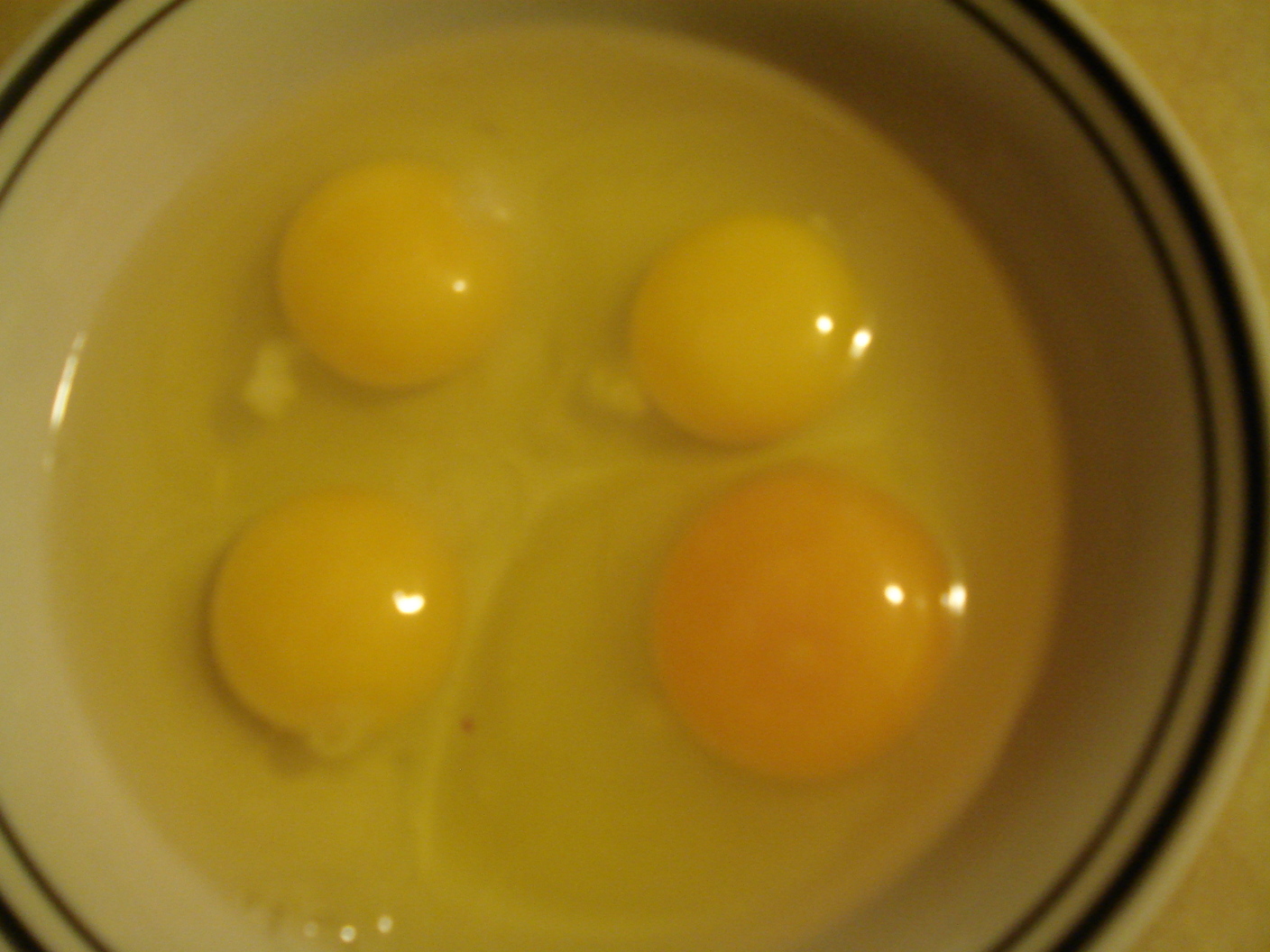
This is evident by the vibrant color of the egg yolks. Here I have three organic eggs from the Co-Op and one free-range egg:

Can you guess which is from the free-range hen?
Organic vs free-range


Here is another picture, the lighting is not great in the first...


So after eating a couple of the yolks raw, I decided to fry up some of the eggs with some bacon and sausage.

First I threw some bacon on a baking sheet, put it in the oven, turned it on to 400 degrees, and set the timer for 15 minutes. I have found this cooks the bacon perfectly, and leaves the stove open to cook other stuff.

When the bacon had about 5 minutes left, I threw some sausage in the pan to start cooking. When the bacon was done, I took it out of the oven and poured the rendered fat in to a pan and cooked the eggs in it.

Last, I seasoned the sausage and sprinkled salt, pepper, and a little paprika on the eggs.

I like my yolks runny, and although I don't have any direct evidence of this, I suspect that they retain more vitamins and minerals when not fully cooked.

Here's the result:
Paleo power breakfast

For some more info on pastured eggs check out: Stephan Guyenet - Pastured Eggs

Thursday, March 3, 2011

Mainstream Finally Getting a F*cking Clue? Coconut Edition

Andrew Scrivani for The New York Times: Coconut Oil Roasted Sweet Potatoes

Coconut Oil In the News.

The New York Times just ran an article called "Once a Villain, Coconut Oil Charms the Health Food World"

I have to admit, I'm a bit surprised that the mainstream media and health authorities are starting to catch on (a little bit) about how fats actually effect our health. This article is pretty good overall, considering the current nutritional climate in our country.

The article starts out with some knee-jerk saturated fat bashing:
"[C]oconut oil was supposed to be the devil himself in liquid form, with more poisonous artery-clogging, cholesterol-raising, heart-attack-causing saturated fat than butter, lard or beef tallow."
I think this shows how bad things still are in conventional nutrition knowledge; this is probably what the average person believes. Apparently the American Dietetic Association and Federal Government are still on this page, despite a complete lack of evidence. Maybe they're hiding it?

At least some people are catching on. According to Whole Foods' senior grocery coordinator, Errol Schweizer,
"Annual sales growth at Whole Foods “has been in the high double digits for the last five years"
Must be why the damn prices have gone up on my 5 gallon containers of coconut oil! Grow more palm trees. Anyway, why did people get the idea that coconut oil is bad stuff?

“Most of the studies involving coconut oil were done with partially hydrogenated coconut oil, which researchers used because they needed to raise the cholesterol levels of their rabbits in order to collect certain data,”
So they hydrogenated it... Then gave it to an obligate herbivore, the rabbits, who would never naturally have coconut oil in the diet... Wow. No shit it looked bad on paper! Just as a refresher, rabbits do not have an omnivorous digestive capability- and unlike humans, they did not evolve eating a high-fat diet. 

Next up: the American Dietetic Association and Dietary Guidelines for Americans show exactly why their own advice has been making people sick and obese:

"Marisa Moore, a spokeswoman for the American Dietetic Association, a nonprofit association of nutritionists, said, “Different types of saturated fats behave differently.”
The main saturated fat in coconut oil is lauric acid, a medium chain fatty acid. Lauric acid increases levels of good HDL, or high-density lipoprotein, and bad LDL, or low-density lipoprotein, in the blood, but is not thought to negatively affect the overall ratio of the two.
She went on to say that while it is still uncertain whether coconut oil is actively beneficial the way olive oil is, small amounts probably are not harmful. The new federal Dietary Guidelines for Americans recommend that no more than 10 percent of total dietary calories a day come from saturated fat. For a 2,000-calorie diet, that’s about 20 grams."
If someone said this to me, it would probably start a fist fight. And I would kick their ass because they would be obese and inflamed from all the vegetable oil and grains they've been eating. Take advice from the ADA and Federal Government at your own risk... I would say that coconut oil is safer than olive oil in that is much more stable at high-temperatures (resists oxidation), and that it has negligible amounts of dangerous omega-6 polyunsaturated fatty acids.  


Coconut Oil: The Evidence

  1. Health: First off, some observational evidence that coconut oil is not harmful: Several indigenous cultures that are completely free of modern disease eat a large percentage of their calories from coconut oil. These include the Tokelau Islanders, who obtain about 50% of calories from coconut oil [1], and the Kitavans at about 21% of calories from coconut oil [2].

  2. Health: Coconut Oil is about 92% saturated fat. This is a good thing; it doesn't go rancid, oxidize, and contains very few of the poisonous omega-6 PUFA's.

  3. Fat Loss: Coconut Oil is primarily "medium-chain triglycerides". These fatty acids are preferentially metabolized in the liver in to ketones and burned for energy in the brain, muscle, and other tissues instead of being stored as fat. Remember though, if you significantly overeat coconut oil it still gets stored as fat.

  4. Fat Loss: Studies show that consuming coconut oil leads to lower levels of body fat than other oils [3].

  5. Cancer: Coconut Oil produces far less cancer than industrial seed oils (vegetable oils) in animal experiments [4,5]. This is probably due to the drastically lower levels of omega-6 PUFA in coconut oil. 
The Bottom Line
Overall, there is very little research using unrefined coconut oil in humans. The small amount of clinical research seems to show benefits that are congruent with what we see in epidemiological research from healthy indigenous cultures like the Tokelau Islanders and Kitavans. 

I believe unrefined coconut oil is safe and has potential benefits as part of a healthy diet. 


For some more resources on coconut oil, I highly recommend: 

Tuesday, February 22, 2011

Real Food 5: Lamb with Mushrooms and Sweet Potatoes

Sourcing Local Meat
Whenever I visit our local North Coast Co-Op, the first place I always go is the butcher. They have, without a doubt, the best meat selection I've ever encountered at a local store. Meat options range from wild salmon, fresh bay shrimp, local grass-fed beef, local lamb, local pork, buffalo, elk, and more. Here are some of the cuts I frequently buy:

  • Local and grass-fed ground beef 80%: $2.49-2.99/pound
  • Local and grass-fed beef liver: $2.99/pound
  • Local and grass-fed lamb stew meat: $3.99/pound
  • Local and grass-fed lamb roast: $3.99/pound
  • Local natural pork stew meat: $3.99/pound
  • Local natural pork roast: $4.99/pound
  • Natural pork country style ribs: $3.99/pound
If these aren't amazing prices for top quality meat, I don't know what is. I rave about the butcher at the Co-Op to everyone who will listen. 

On my trip to the butcher on Sunday they had some more local lamb stew meat, so I bought two pounds all of it.

Slow-Cooked Local Grass-Fed Lamb, Mushrooms, and Sweet Potatoes

Lamb in slow-cooker

Woke up at 9am this morning to put the lamb in:
  • A couple lbs lamb
  • 1 can coconut milk
  • Salt
  • Pepper
  • Rosemary
  • Cumin

Then I just press go and leave it for 6 hours or so on high. 


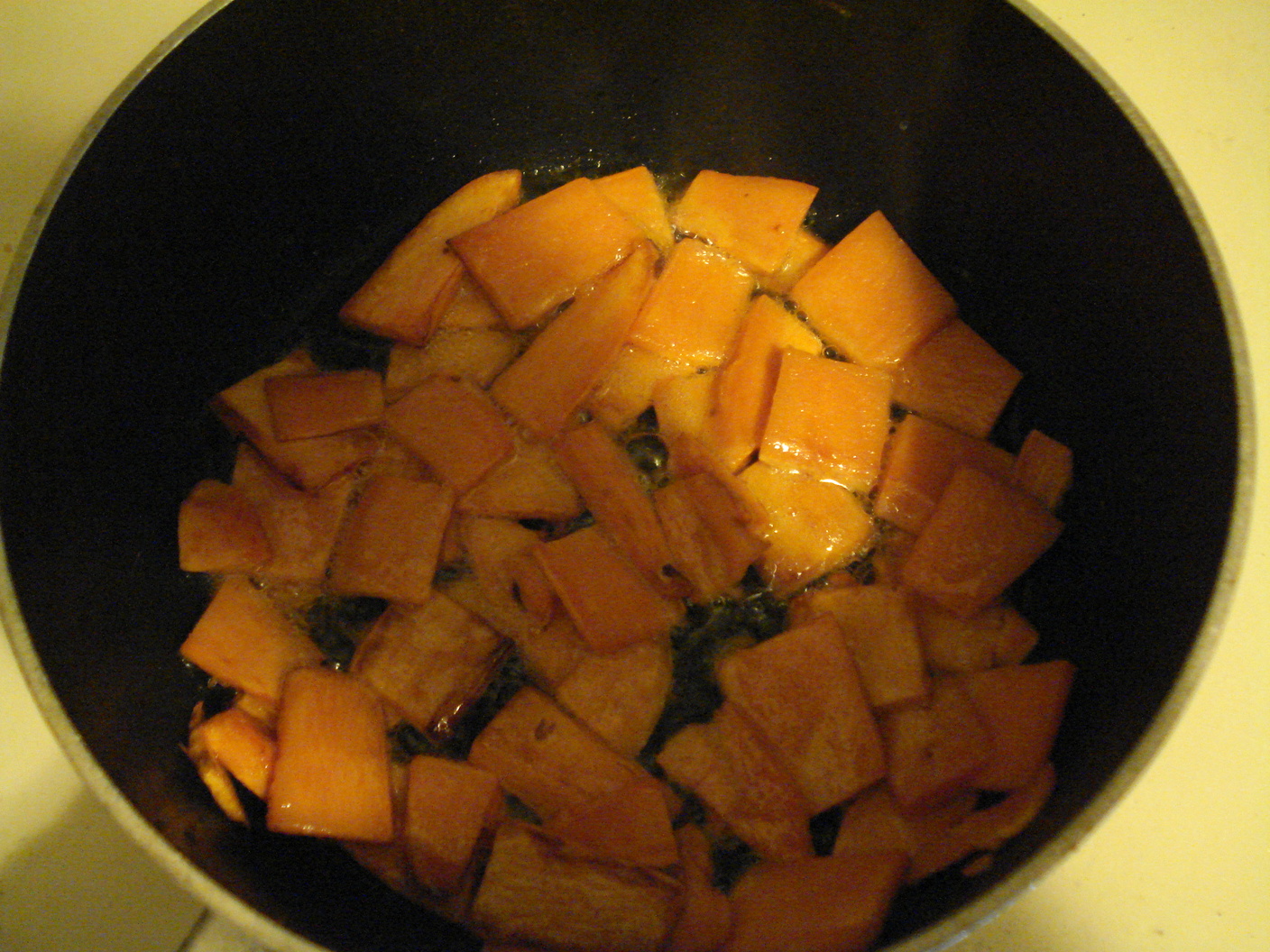
Sweet Potatoes brazing in coconut oil and ghee

When I got home I threw sweet potato slices in to a mix of ghee and coconut oil.
      
- 1 lb sweet potato (one medium)
- couple spoonfulls of oil (can use butter, ghee, coconut oil.).

Then just turn to med heat, cover and let the slices sizzle in the oil until they are soft on the inside, a little crispy on the outside, and soaking in oil. 

Absolutely delicious, this is a go-to dish for me.


Finished lamb with mushrooms on top.

The last step was to sautee some mushroooms in olive oil until they were soft and soaking with oil, then pour them over the lamb in a bowl. 

This meal was amazing, so simple and easy, but tastes fantastic.

Wednesday, February 16, 2011

Get Over Fear of Bacteria: Fermentation Primer

Fun with fungi and bacteria. 
In my last post I mentioned how I had been experimenting with some home fermentation techniques. Well it took a little while, but the ball is really rolling on this now. I just tried a bottle of the latest elixir... Wow! It inspired me to sit down and type this out right now.


Some gooood stuff. 
Here's a brief explanation of  what fermentation is, its history, and benefits.

What is fermentation?
Fermentation is when microorganisms eat a carbohydrate, usually sugar, and release byproducts such as ethanol, lactic acid, and carbon dioxide. Basically you feed bacteria or yeast (fungi) sugar and they produce copious amounts of alcohol, CO2, and lactic acid. This results in a well preserved and usually bubbly (and sometimes alcoholic) food or drink. Think of fermentation as bacteria predigesting food to make nutrients more available for absorption.

History of fermentation.
Fermentation has been occurring in nature for longer than humans have been on the planet; in fact it's a vital process in the cycling of nutrients through the food chain that makes life possible.

The earliest evidence of humans controlling the fermentation process is wine-making about 8,000 years ago in the country of Georgia [1].


The first alcoholic society. Just kidding.
Iran, Babylon, Egypt, Sudan, and Mexico all were using fermentation techniques thousands of years ago and nearly every indigenous culture has developed some type of fermentation techniques. But why is it that fermentation has been sought out by so many different societies?

What kinds of food are fermented?
Here's a small sampling of foods that are dependent on the action of bacteria and yeasts.
  • Alcoholic beverages: Wine, Beer, Liquors, Mead
  • Lacto-fermented vegetables: Sauerkraut, Kimchi
  • Fermented dairy products: Yogurt, kefir, cultured milk, cheese
  • Bread: Such as sourdough (CO2 gas from bacteria causes bread to rise)
  • Fermented teas: Kombucha
  • Water kefir
  • Beet/bread kvass
  • Fermented soy: Miso and tempeh
  • Cured meats: sausages, salami, etc.
  • Other meats: rotten fish in the ground (yum!)
  • Poi - fermented Taro root
  • Fermented cassava
  • Many types of fermented grains and legumes.

Benefits of fermentation.
Although there are probably a lot of things I'm missing, fermentation seems to be generally used for these reasons:
  1. Adds a diversity of textures, flavors, and smells to foods.
    • Fermented foods taste awesome, but are definitely an acquired taste. 
  2. Preserving foods to last a long time without refrigeration.
    • Using bacteria or yeasts to convert carbohydrates in to alcohol, lactic acid, and acetic acid dramatically increase the amount of time that foods can go without spoiling. Before refrigerators, this is what everyone had to use.
    • For example lacto-fermentation creates lactic acid, a natural preservative that inhibits the growth of putrefying bacteria. 
  3. Improves nutrients available in foods.
    • Fermentation dramatically increases the availability of nutrients such as vitamins, minerals, and amino acids through a variety of mechanisms. Bacteria predigest foods and make them available for us to absorb. This really deserves an article of its own.
    • Fermentation creates Vitamin K2, an extremely important nutrient that nearly everyone is deficient in.
  4. Gets rid of anti-nutrients.
    • Double star this one- this is really important. A main part of ancestral nutrition is to not eat the anti-nutrients that are present in grains and legumes such as phytic acid, lectins, and other proteins. 
    • Fermentation breaks down phytic acid, destroys lectins, and can eliminate other problematic proteins. This is why it's so important to properly prepare grains and legumes if you are going to eat them.
  5. Decreases cooking time and uses less fuel.
    • This isn't so important in the modern world, but if you had limited amount of time and fuel this could be a big benefit. 
  6. Indirect benefits- Probiotic Bacteria:
    • Double star this one too, probiotic bacteria deserve an article of their own. In short, humans depend on the bacteria in our guts for a huge range of physiologic functions. With our industrial diets, good bacteria are often forced out and putrefying bacteria take over the gut which leads to a wide variety of nasty problems. 
So here's what some experts say on fermented foods:

Chris Kresser - The Healthy Skeptic:

"Almost all healthy, traditional cultures that have been studied regularly consume fermented foods like yogurt, kefir, sauerkraut, kim chi and kombucha. These foods have numerous health benefits, but in the context of heart disease one of the most important reasons to include them in the diet is that they are one of the few dietary sources of vitamin K2.  
...A 1993 study showed that those in the highest third of vitamin K2 intake were 52 percent less likely to develop severe calcification of the arteries, 41 percent less likely to develop heart disease, and 57 percent less likely to die from it."
"Probiotics found in fermented foods like yogurt, kefir, sauerkraut and kimchi strengthen and maintain the mucosal barrier system (in our respiratory and intestinal tract), which is our first line of defense against pathogens. What’s more, 75% of our immune system if found in the gut."
 Stephen Guyenet - Whole Health Source
"Healthy grain-based African cultures typically soaked, ground and fermented their grains before cooking, creating a sour porridge that's nutritionally superior to unfermented grains. The bran was removed from corn and millet during processing, if possible. Legumes were always soaked prior to cooking.

These traditional food processing techniques have a very important effect on grains and legumes that brings them closer in line with the "paleolithic" foods our bodies are designed to digest. They reduce or eliminate toxins such as lectins and tannins, greatly reduce anti-nutrients such as phytic acid and protease inhibitors, and improve vitamin content and amino acid profile. Fermentation is particularly effective in this regard. One has to wonder how long it took the first agriculturalists to discover fermentation, and whether poor food preparation techniques or the exclusion of animal foods could account for their poor health."
Good resources from Stephen:


Chris Masterjohn - The Daily Lipid
"Vitamin K2 is abundant in grass-fed animal fats and fermented foods, and promotes broad facial structure, healthy bones and teeth, a properly functioning nervous system, and robust cardiovascular health.
An accumulating body of research suggests that vitamin K2 may also protect against cancer."
 Robb Wolf - Paleo Solution
"The roles these bacteria play are varied, but they are critical in not only the digestive process, but also in actually protecting the gut lining. Our beneficial flora (the living mass of bacteria in our intestines) actually line the villi and microvilli in such a tight association that the bacteria are literally the first layer of our intestines. These bacteria displace potentially pathogenic bacteria, yeast,k and parasites; help us to digest macronutrients; and are responsible for production of various vitamins from precursor molecules.
...Most people are familiar with various fermented foods such as yogurt, kiefer, miso, kimchi, and raw sauerkraut. All of these foods (if not pasteurized) provide live cultures of beneficial bacteria."
Mark Sisson - Mark's Daily Apple

"[F]ermentation can render previously inedible or even dangerous foods edible and somewhat nutritious. The lectins, gluten, and phytates in grains, for example, can be greatly reduced by fermentation. I don’t advocate the consumption of bread, but if you’re going to treat yourself to any gluten grain-derived food, make real, long-fermented sourdough bread the one. The Romans managed to do okay on the stuff, but that’s only because meat was expensive and didn’t travel as well. Real sourdough is a good choice for guests who simply must have their bread, but don’t think fermentation makes it Primal approved.
Dairy is another beneficiary of fermentation. In fact, next to no dairy at all, I put fermented, raw, grass-fed dairy as the optimum form. The fermentation process breaks down the lactose, thus mitigating a potentially problematic sugar and decreasing the carb content (you can consider the official carb count of real yogurt cut in half; producers list the number of carbs present in the dairy before fermentation, and the fermentation process breaks down the lactose/sugar)." 


Wrap up.
Fermented foods is fun to make and has numerous health benefits. Stay tuned for part 2 where I'll show you what I've been making.

What kind of fermented foods do you like? Leave a comment with your thoughts.

Wednesday, February 2, 2011

Healthy Home Economist, My Fermented Food Adventures

Bringing it back.
I apologize for the hiatus- my last semester of school just started and time is stretched pretty thin between 17 units of class, track & field season, getting a business going, and applying for internships and grad school. Exciting stuff, but had to push the blog to the side for a while. Now that things are starting to even out I've got some good stuff coming down the line.

Healthy Home Economist.
In my internet travels I recently came across Sarah's blog 'The Healthy Home Economist', and I have to admit I'm very impressed. Her views on nutrition are pretty aligned with the Weston A. Price Foundation (A good thing- check out their site if you haven't).

After reading a couple of articles I went through several months of archives reading articles and watching her videos (which are excellent). Sarah covers a variety of topics from nutrition, environmental pollutants, medicine, food politics, exercise, and has several great videos how to do the stuff yourself. Sarah obviously follows her own advice, she is in amazing shape for a 40-something mother of 3 (but who's counting, right?).

My favorite parts of her site are the videos showing how to make fermented foods. A lot of these recipes are from Nourishing Traditions, one of my top nutrition and recipe books, but the recipes are far easier after you watch the process in a video.

In case you don't know, fermented foods are incredibly important for a variety of reasons that I will cover in depth in future posts such as repopulating intestinal bacteria, displacing bad bacteria, neutralizing plant toxins and more. They are one of the main things that modern people (Americans especially) are severely lacking in our diet.

Here are some of my favorite food videos so far:

Kombucha:

Kefir:

Beet Kvass:

And here are some of my other favorite articles:

Great work Sarah, keep it up.

Saturday, December 18, 2010

Real Food 4: Nori Rolls

More food posts
There's been a request for more posts about food (shoutout to Max). Luckily I've been making tons of great new foods and have some pictures to share with you guys.

The Nori Roll
Lately for my meals I've been making a lot of ghetto sushi. It makes a delicious meal fit for a king, kind of like a sandwich without the bread. This has become a staple for me because it is healthy, tastes amazing, versatile, and very quick too make. Here's the basic idea:

  1. Take a sheet of Nori
  2. Add base: egg or cauliflower rice.
  3. Add meat: shrimp, ground beef, chicken, steak, etc.
  4. Add accessories: Avocado (my favorite), caramelized onions, whatever your heart desires. 
  5. Add flavoring: my favorite is Sriracha hot sauce or some type of wasabi sauce. 
  6. Wrap it up. If you haven't used Nori before this may be difficult but after you try it a couple times it gets a lot easier.
Almost ready: Nori with egg, cauliflower rice, shrimp, avocado, and sriracha.
One of the great things about this is how flexible the recipe is. You can create great combos depending on whatever you have lying around. The other day I made one with scrambled eggs, bacon, and avocado. I've found that cooking up a few types of meat and having them ready throughout the weak when needed allows me to make a complete meal in a couple of minutes.
A finished product: Egg, cauliflower rice, grassfed ground beef, avocado, sriracha sauce. Veggies on side
Nutrition.
Nutrition on these are great- Nori is high in iodine (you might be deficient if you don't eat much salt), Vitamin A, and several other micro-nutrients. There is good fats from the meat, sea food, eggs and avocados, plenty of protein from meats and eggs. I usually have a few vegetables on the side when I've got some lying around.

Odds and ends.
If anyone requests it, I'll post a video of how to make a nori roll including the rolling part.

Here's a quick primer on how to make cauliflower rice: 

  1. Shred up a head of cauliflower with a cheese grater or a food processor. 
  2. Heat up some oil in a pan
  3. Throw the cauliflower in the pan over medium heat and cover with a lid. 
  4. Cook for 10 minutes or so, whenever the cauliflower starts to get soft.
  5. You can use it plain or add spices during cooking for flavored rice.
This is a vegetable replacement for rice that can be used in any type of meal. It has the same consistency as rice and tastes great. You can make a big container of it and use it throughout the week. 

Questions or comments? 

Wednesday, October 20, 2010

Real Food 3: Chicken and Pork Taco Salad

Another quick and delicious lunch:

Chicken and Pork Taco Salad on Kale and Lettuce

Take some ground pork and ground chicken and throw it in the skillet with some mexican spices to start cooking. While the meat browns, chop up some Kale and Lettuce in to small strips. Chop a zucchini in to slices and throw it in to finish cooking with the meat. When the meat and zucchini is done, just throw your kale and lettuce in the bottom of a bowl and serve the meat mixture on top of it. I also mixed in some chili-garlic sauce for some heat. Heres the final product:

click for full size

Monday, October 18, 2010

Real Food 2: Squash, pork, veggies

My post-workout meal for today. Practice was: bounding exercises, followed by bleacher sprints, then 6 x 100m hill sprints out in the forest. After catching my breath and suppressing the strong urge to empty the contents of my stomach on to the base of a Redwood tree I was kind of hungry so I came home and made this:

Butternut squash, pork sausage, and vegetables

Since I just completed a glycogen-depleting workout and will be strength training later today,  there is some extra carbs from squash in here. I took butternut squash, and sliced it very thin- about 1/4 inch and let it sizzle in some butter till it was crispy on the outside and cooked through. Meanwhile I cooked the organic pork sausage, scooped it out of the pan, then cooked the veggies in the pork fat. Veggies were green beans, summer squash, zucchini, and mushroom. 

click for full size

Real Food 1: Vegetables in butter, eggs, steak

I'm going to start posting some pictures of my culinary adventures. The food I make isn't always artistic looking, but I make sure that it always fulfills these standards:
  1. Tastes delicious
  2. Provides nutritious fuel
  3. Is cost effective
  4. Doesn't take too long to prepare

Vegetables Sautéed In Butter, Fried Eggs, Steak w/ Spices

This is today's breakfast. Took some green beans, a serrano pepper, handfull of mushrooms, a zucchini, and a sumer squash and sautéed everything in 4 tbsp of melted butter. After those were done, I fried 3 eggs in the remaining butter, then took the eggs out and cooked the sliced up steak in the remaining fat with some mexican spices. Very easy, little prep work, and tastes delicious.

Click for full size